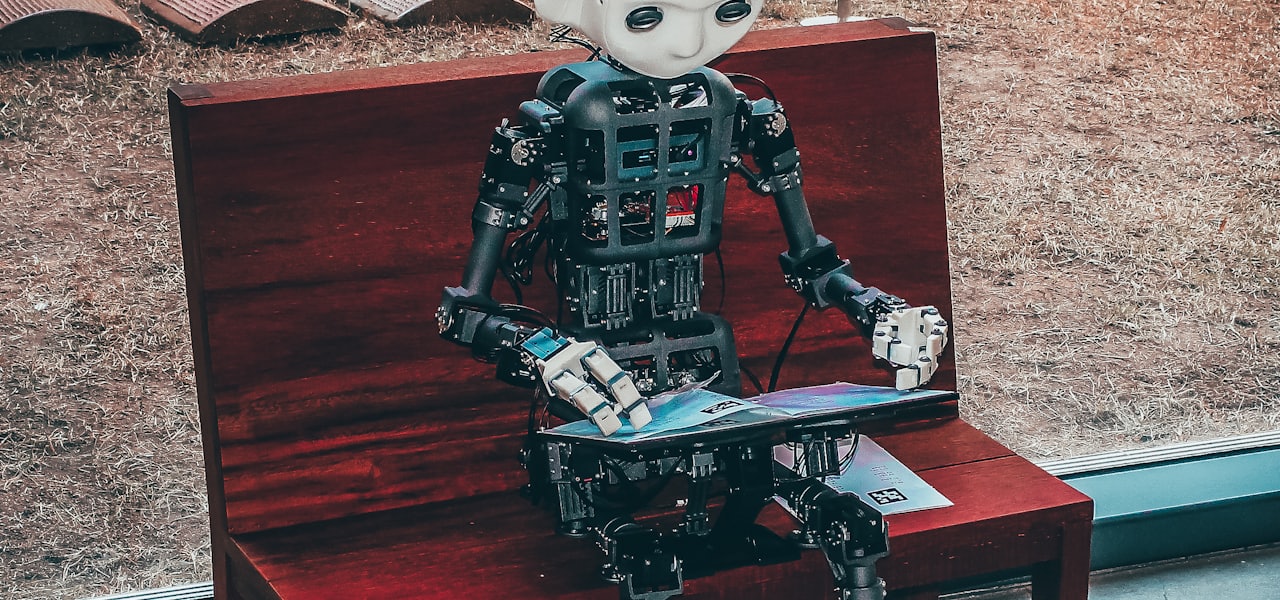
Social media began in the form of generalized online communities. These online communities formed on websites like Geocities.com in 1994, Theglobe.com in 1995, and Tripod.com in 1995. Many of these early communities focused on social interaction by bringing people together through the use of chat rooms. The chat rooms encouraged users to share personal information, ideas, or even personal web pages. Later the social networking community Classmates took a different approach by simply having people link to each other by using their personal email addresses. By the late 1990s, social networking websites began to develop more advanced features to help users find and manage friends. These newer generation of social networking websites began to flourish with the emergence of SixDegrees.com in 1997, Makeoutclub in 2000, Hub Culture in 2002, and Friendster in 2002. However, the first profitable mass social networking website was the South Korean service, Cyworld. Cyworld initially launched as a blog-based website in 1999 and social networking features were added to the website in 2001. Other social networking websites emerged like Myspace in 2002, LinkedIn in 2003, and Bebo in 2005. In 2009, the social networking website Facebook (launched in 2004) became the largest social networking website in the world. Both Instagram and Kik were launched in October 2010. Active users of Facebook increased from just a million in 2004 to over 750 million by the year 2011. Making internet-based social networking both a cultural and financial phenomenon. In September 2011, Snapchat was launched and reported over 300 million users in 2021. == Psychology of social networking == A social network is a social structure made up of individuals or organizations who communicate and interact with each other. Social networking sites – such as Facebook, Twitter, Instagram, Pinterest and LinkedIn – are defined as technology-enabled tools that assist users with creating and maintaining their relationships. A study found that middle schoolers reported using social media to see what their friends are doing, to post pictures, and to connect with friends. Human behavior related to social networking is influenced by major individual differences, meaning that people differ quite systematically in the quantity and quality of their social relationships. Two of the main personality traits that are responsible for this variability are the traits of extraversion and introversion. Extraversion refers to the tendency to be socially dominant, exert leadership, and influence on others. In contrast, introversion reflects a tendency towards shyness, social phobia, or even avoid social situations altogether, which could potentially reduce the number of social contacts a person may have. These individual differences may result in different social networking outcomes. Other psychology factors related to social media and Media psychology are depression, anxiety, attachment, self-identity, well-being, and the need to belong. === Neuroscience === The three domains that neural systems rely on to be strengthened to support social media use are social cognition, self-referential cognition, and social rewarding. When someone posts something on social media, they think of how their audience will react, while the audience thinks of the motivations behind posting the information. Both parties are analyzing the other's thoughts and feelings, which coherently rely on multiple network systems of the brain including the dorsomedial prefrontal cortex, bilateral temporoparietal junction, anterior temporal lobes, inferior frontal gyri, and posterior cingulate cortex. All of these systems work to help us process social behaviors and thoughts drawn out on social media. Social media requires a great deal of self-referential thought. People use social media as a platform to express their opinions and show off their past and present selves. In other words, as Bailey Parnell said in her Ted Talk, we're showing off our "highlight reel" (4). When one receives feedback from others, the individual obtains more reflected self-appraisal which leads to comparisons of their social behaviors or "highlights" to other users. Self-referential thought involves activity in the medial prefrontal cortex and the posterior cingulate cortex. The brain uses these systems when thinking of oneself. A 2021 umbrella review found that most associations between adolescent social media use and mental health were characterized as weak or inconsistent, though certain studies identified 'substantial' negative impacts, particularly linked to passive consumption and problematic use. Social media also provides a constant supply of rewards that keeps users coming back for more. Whenever users receive a like or a new follower, it activates the brain's social reward system which includes the ventromedial prefrontal cortex, ventral striatum, and ventral tegmental area. This system has been found to activate in response to positive feedback from peers, suggesting that users experience online acceptance in a similar manner to other material rewards or positive experiences, further acting as a potential reward. While these areas of the brain become strengthened, other parts of the brain start to weaken. Technology is encouraging multi-tasking, especially because of how easy it is to switch from one task to another by opening another tab or using two devices at once. The brain's hippocampus is mainly associated with long-term memory. In a study done by Russell Poldark, a professor at UCLA, they found that "for the task learned without distraction, the hippocampus was involved. However, for the task learned with the distraction of the beeps, the hippocampus was not involved; but the striatum was, which is the brain system that underlies our ability to learn new skills." The study concludes that multitasking can cause reliance on the striatum more than the hippocampus, which can change the way we learn. The striatum is known to be connected to mainly the brain's reward system. The brain will strengthen the neurons to the striatum while it weakens the neurons to the hippocampus to make the brain more efficient. Because our brain starts to rely on the striatum more than the hippocampus, it becomes harder for us to process new information. Nicholas Carr, author of The Shallows: How The Internet Is Changing Our Brains, agrees: "What psychologists and brain scientists tell us about interruptions is that they have a fairly profound effect on the way we think. It becomes much harder to sustain attention, to think about one thing for a long period of time, and to think deeply when new stimuli are pouring at you all day long. I argue that the price we pay for being constantly inundated with information is a loss of our ability to be contemplative and to engage in the kind of deep thinking that requires you to concentrate on one thing." === Well-Being === How does well-being relate to social media? In an article titled Social Impact of Psychological Research on Well-Being Shared in Social Media, Pulido et al. found a 15.7% social impact in their results. These new results were compared to a previous study conducted by Pulido et al., which had a high of 4.98% compared to 27.5% in the new study. These results show the ESISM, which is evidence of social impact present. In a two-year span, the difference between social impact rose 22.52% according to these studies. When taking into consideration that an increasingly large number of teens report either being active on, or having used, some form of social media, ranging from apps such as Facebook to TikTok, researching the effects of social media on the well-being of teens and young adults has become more of a topic of focus in recent years. === Depression === Especially in today's society, social media has gained a new perspective on younger generations. It is what younger generations are born into and are growing up to use, particularly what is running today's society. Social Media has its downfalls regarding depression and mental health. Many users often compare their lives regarding what they see on these platforms. In an article Does Social Media Cause Depression? by the Child Mind Institute, Miller states that "several studies, teenage and young adult users who spend the most time on Instagram, Facebook and other platforms for have shown to have substantially (from 13 to 66 percent) higher rates of reported depression than those who spent the least time", what the study shows how Facebook and Instagram, platforms showcasing daily lives and or lifestyles, or less fulfilling or less satisfied or more flaunting base or superficial. Instead of social community, there has become a perception of individuals striving for a life that is not real, whether that is editing photos or making life seem perfect when it is not. This causes a sense of depression by the weight of a comparing game. In "How Social Media Affects Y
Apache Drill
Apache Drill is an open-source software framework that supports data-intensive distributed applications for interactive analysis of large-scale datasets. Built chiefly by contributions from developers from MapR, Drill is inspired by Google's Dremel system. Drill is an Apache top-level project. Drill supports a variety of NoSQL databases and file systems, including Alluxio, HBase, MongoDB, MapR-DB, HDFS, MapR-FS, Amazon S3, Azure Blob Storage, Google Cloud Storage, Swift, NAS and local files. A single query can join data from multiple datastores. Drill's datastore-aware optimizer automatically restructures a query plan to leverage the datastore's internal processing capabilities. In addition, Drill supports data locality, if Drill and the datastore are on the same nodes. Tom Shiran is the founder of the Apache Drill Project. It was designated an Apache Software Foundation top-level project in December 2016. == Features == One explicitly stated design goal is that Drill is able to scale to 10,000 servers or more and to be able to process petabytes of data and trillions of records in seconds. Schema-free JSON document model similar to MongoDB and Elasticsearch, without requiring a formal schema to be declared Industry-standard APIs: ANSI SQL, ODBC/JDBC, RESTful APIs Extremely user and developer friendly Pluggable architecture enables connectivity to multiple datastores Version 1.9 added dynamic user-defined functions Version 1.11 added cryptographic-related functions and PCAP file format support == Back-end support == Drill is primarily focused on non-relational datastores, including Apache Hadoop text files, NoSQL, and cloud storage. A notable feature also includes in situ querying of local JSON and Apache Parquet files. Some additional datastores that it supports include: All Hadoop distributions (HDFS API 2.3+), including Apache Hadoop, MapR, CDH and Amazon EMR NoSQL: MongoDB, Apache HBase, Apache Cassandra Online Analytical Processing: Apache Kudu, Apache Druid, OpenTSDB Cloud storage: Amazon S3, Google Cloud Storage, Azure Blob Storage, Swift, IBM Cloud Object Storage Diverse data formats, including Apache Avro, Apache Parquet and JSON RDBMs storage plugins (Using JDBC to connect to MySQL, PostgreSQL, and others) A new datastore can be added by developing a storage plugin. Drill's "schema-free" JSON data model enables it to query non-relational datastores in-situ . == Front-end support == Drill itself can be queried via JDBC, ODBC, or REST through a variety of methods and languages including Python and Java. The default install includes a web interface allowing end-users to execute ANSI SQL directly and export data tables as CSV files without any programming. The dashboard library, Apache Superset, is particularly well suited for visualization of data queried with Drill.
Diffusion model
In machine learning, diffusion models, also known as diffusion-based generative models or score-based generative models, are a class of latent variable generative models. A diffusion model consists of two major components: the forward diffusion process, and the reverse sampling process. The goal of diffusion models is to learn a diffusion process for a given dataset, such that the process can generate new elements that are distributed similarly as the original dataset. A diffusion model models data as generated by a diffusion process, whereby a new datum performs a random walk with drift through the space of all possible data. A trained diffusion model can be sampled in many ways, with different efficiency and quality. There are various equivalent formalisms, including Markov chains, denoising diffusion probabilistic models, noise conditioned score networks, and stochastic differential equations. They are typically trained using variational inference. The model responsible for denoising is typically called its "backbone". The backbone may be of any kind, but they are typically U-nets or transformers. As of 2024, diffusion models are mainly used for computer vision tasks, including image denoising, inpainting, super-resolution, image generation, and video generation. These typically involve training a neural network to sequentially denoise images blurred with Gaussian noise. The model is trained to reverse the process of adding noise to an image. After training to convergence, it can be used for image generation by starting with an image composed of random noise, and applying the network iteratively to denoise the image. Diffusion-based image generators have seen widespread commercial interest, such as Stable Diffusion and DALL-E. These models typically combine diffusion models with other models, such as text-encoders and cross-attention modules to allow text-conditioned generation. Other than computer vision, diffusion models have also found applications in natural language processing such as text generation and summarization, sound generation, and reinforcement learning. == Denoising diffusion model == === Non-equilibrium thermodynamics === Diffusion models were introduced in 2015 as a method to train a model that can sample from a highly complex probability distribution. They used techniques from non-equilibrium thermodynamics, especially diffusion. Consider, for example, how one might model the distribution of all naturally occurring photos. Each image is a point in the space of all images, and the distribution of naturally occurring photos is a "cloud" in space, which, by repeatedly adding noise to the images, diffuses out to the rest of the image space, until the cloud becomes all but indistinguishable from a Gaussian distribution N ( 0 , I ) {\displaystyle {\mathcal {N}}(0,I)} . A model that can approximately undo the diffusion can then be used to sample from the original distribution. This is studied in "non-equilibrium" thermodynamics, as the starting distribution is not in equilibrium, unlike the final distribution. The equilibrium distribution is the Gaussian distribution N ( 0 , I ) {\displaystyle {\mathcal {N}}(0,I)} , with pdf ρ ( x ) ∝ e − 1 2 ‖ x ‖ 2 {\displaystyle \rho (x)\propto e^{-{\frac {1}{2}}\|x\|^{2}}} . This is just the Maxwell–Boltzmann distribution of particles in a potential well V ( x ) = 1 2 ‖ x ‖ 2 {\displaystyle V(x)={\frac {1}{2}}\|x\|^{2}} at temperature 1. The initial distribution, being very much out of equilibrium, would diffuse towards the equilibrium distribution, making biased random steps that are a sum of pure randomness (like a Brownian walker) and gradient descent down the potential well. The randomness is necessary: if the particles were to undergo only gradient descent, then they will all fall to the origin, collapsing the distribution. === Denoising Diffusion Probabilistic Model (DDPM) === The 2020 paper proposed the Denoising Diffusion Probabilistic Model (DDPM), which improves upon the previous method by variational inference. ==== Forward diffusion ==== To present the model, some notation is required. β 1 , . . . , β T ∈ ( 0 , 1 ) {\displaystyle \beta _{1},...,\beta _{T}\in (0,1)} are fixed constants. α t := 1 − β t {\displaystyle \alpha _{t}:=1-\beta _{t}} α ¯ t := α 1 ⋯ α t {\displaystyle {\bar {\alpha }}_{t}:=\alpha _{1}\cdots \alpha _{t}} σ t := 1 − α ¯ t {\displaystyle \sigma _{t}:={\sqrt {1-{\bar {\alpha }}_{t}}}} σ ~ t := σ t − 1 σ t β t {\displaystyle {\tilde {\sigma }}_{t}:={\frac {\sigma _{t-1}}{\sigma _{t}}}{\sqrt {\beta _{t}}}} μ ~ t ( x t , x 0 ) := α t ( 1 − α ¯ t − 1 ) x t + α ¯ t − 1 ( 1 − α t ) x 0 σ t 2 {\displaystyle {\tilde {\mu }}_{t}(x_{t},x_{0}):={\frac {{\sqrt {\alpha _{t}}}(1-{\bar {\alpha }}_{t-1})x_{t}+{\sqrt {{\bar {\alpha }}_{t-1}}}(1-\alpha _{t})x_{0}}{\sigma _{t}^{2}}}} N ( μ , Σ ) {\displaystyle {\mathcal {N}}(\mu ,\Sigma )} is the normal distribution with mean μ {\displaystyle \mu } and variance Σ {\displaystyle \Sigma } , and N ( x | μ , Σ ) {\displaystyle {\mathcal {N}}(x|\mu ,\Sigma )} is the probability density at x {\displaystyle x} . A vertical bar denotes conditioning. A forward diffusion process starts at some starting point x 0 ∼ q {\displaystyle x_{0}\sim q} , where q {\displaystyle q} is the probability distribution to be learned, then repeatedly adds noise to it by x t = 1 − β t x t − 1 + β t z t {\displaystyle x_{t}={\sqrt {1-\beta _{t}}}x_{t-1}+{\sqrt {\beta _{t}}}z_{t}} where z 1 , . . . , z T {\displaystyle z_{1},...,z_{T}} are IID (Independent and identically distributed random variables) samples from N ( 0 , I ) {\displaystyle {\mathcal {N}}(0,I)} . The coefficients 1 − β t {\displaystyle {\sqrt {1-\beta _{t}}}} and β t {\displaystyle {\sqrt {\beta _{t}}}} ensure that Var ( X t ) = I {\displaystyle {\mbox{Var}}(X_{t})=I} assuming that Var ( X 0 ) = I {\displaystyle {\mbox{Var}}(X_{0})=I} . The values of β t {\displaystyle \beta _{t}} are chosen such that for any starting distribution of x 0 {\displaystyle x_{0}} , if it has finite second moment, then lim t → ∞ x t | x 0 {\displaystyle \lim _{t\to \infty }x_{t}|x_{0}} converges to N ( 0 , I ) {\displaystyle {\mathcal {N}}(0,I)} . The entire diffusion process then satisfies q ( x 0 : T ) = q ( x 0 ) q ( x 1 | x 0 ) ⋯ q ( x T | x T − 1 ) = q ( x 0 ) N ( x 1 | α 1 x 0 , β 1 I ) ⋯ N ( x T | α T x T − 1 , β T I ) {\displaystyle q(x_{0:T})=q(x_{0})q(x_{1}|x_{0})\cdots q(x_{T}|x_{T-1})=q(x_{0}){\mathcal {N}}(x_{1}|{\sqrt {\alpha _{1}}}x_{0},\beta _{1}I)\cdots {\mathcal {N}}(x_{T}|{\sqrt {\alpha _{T}}}x_{T-1},\beta _{T}I)} or ln q ( x 0 : T ) = ln q ( x 0 ) − ∑ t = 1 T 1 2 β t ‖ x t − 1 − β t x t − 1 ‖ 2 + C {\displaystyle \ln q(x_{0:T})=\ln q(x_{0})-\sum _{t=1}^{T}{\frac {1}{2\beta _{t}}}\|x_{t}-{\sqrt {1-\beta _{t}}}x_{t-1}\|^{2}+C} where C {\displaystyle C} is a normalization constant and often omitted. In particular, we note that x 1 : T | x 0 {\displaystyle x_{1:T}|x_{0}} is a Gaussian process, which affords us considerable freedom in reparameterization. For example, by standard manipulation with Gaussian process, x t | x 0 ∼ N ( α ¯ t x 0 , σ t 2 I ) {\displaystyle x_{t}|x_{0}\sim N\left({\sqrt {{\bar {\alpha }}_{t}}}x_{0},\sigma _{t}^{2}I\right)} x t − 1 | x t , x 0 ∼ N ( μ ~ t ( x t , x 0 ) , σ ~ t 2 I ) {\displaystyle x_{t-1}|x_{t},x_{0}\sim {\mathcal {N}}({\tilde {\mu }}_{t}(x_{t},x_{0}),{\tilde {\sigma }}_{t}^{2}I)} In particular, notice that for large t {\displaystyle t} , the variable x t | x 0 ∼ N ( α ¯ t x 0 , σ t 2 I ) {\displaystyle x_{t}|x_{0}\sim N\left({\sqrt {{\bar {\alpha }}_{t}}}x_{0},\sigma _{t}^{2}I\right)} converges to N ( 0 , I ) {\displaystyle {\mathcal {N}}(0,I)} . That is, after a long enough diffusion process, we end up with some x T {\displaystyle x_{T}} that is very close to N ( 0 , I ) {\displaystyle {\mathcal {N}}(0,I)} , with all traces of the original x 0 ∼ q {\displaystyle x_{0}\sim q} gone. For example, since x t | x 0 ∼ N ( α ¯ t x 0 , σ t 2 I ) {\displaystyle x_{t}|x_{0}\sim N\left({\sqrt {{\bar {\alpha }}_{t}}}x_{0},\sigma _{t}^{2}I\right)} we can sample x t | x 0 {\displaystyle x_{t}|x_{0}} directly "in one step", instead of going through all the intermediate steps x 1 , x 2 , . . . , x t − 1 {\displaystyle x_{1},x_{2},...,x_{t-1}} . ==== Backward diffusion ==== The key idea of DDPM is to use a neural network parametrized by θ {\displaystyle \theta } . The network takes in two arguments x t , t {\displaystyle x_{t},t} , and outputs a vector μ θ ( x t , t ) {\displaystyle \mu _{\theta }(x_{t},t)} and a matrix Σ θ ( x t , t ) {\displaystyle \Sigma _{\theta }(x_{t},t)} , such that each step in the forward diffusion process can be approximately undone by x t − 1 ∼ N ( μ θ ( x t , t ) , Σ θ ( x t , t ) ) {\displaystyle x_{t-1}\sim {\mathcal {N}}(\mu _{\theta }(x_{t},t),\Sigma _{\theta }(x_{t},t))} . This then gives us a backward diffusion process p θ {\displaystyle p_{\theta }} defined by p θ ( x T ) = N ( x T | 0 , I ) {\displaystyle p_{\theta }(x
Deterministic blockmodeling
Deterministic blockmodeling is an approach in blockmodeling that does not assume a probabilistic model, and instead relies on the exact or approximate algorithms, which are used to find blockmodel(s). This approach typically minimizes some inconsistency that can occur with the ideal block structure. Such analysis is focused on clustering (grouping) of the network (or adjacency matrix) that is obtained with minimizing an objective function, which measures discrepancy from the ideal block structure. However, some indirect approaches (or methods between direct and indirect approaches, such as CONCOR) do not explicitly minimize inconsistencies or optimize some criterion function. This approach was popularized in the 1970s, due to the presence of two computer packages (CONCOR and STRUCTURE) that were used to "find a permutation of the rows and columns in the adjacency matrix leading to an approximate block structure". The opposite approach to deterministic blockmodeling is a stochastic blockmodeling approach.
Sigmoid function
A sigmoid function is any mathematical function whose graph has a characteristic S-shaped or sigmoid curve. A common example of a sigmoid function is the logistic function. Other sigmoid functions are given in the Examples section. In some fields, most notably in the context of artificial neural networks, the term "sigmoid function" is used as a synonym for "logistic function". Special cases of sigmoid functions include the Gompertz curve (used in modeling systems that saturate at large values of x) and the ogee curve (used in the spillway of some dams). Sigmoid functions have domain of all real numbers, with return (response) value commonly monotonically increasing but could be decreasing. Sigmoid functions most often show a return value (y axis) in the range 0 to 1. Another commonly used range is from −1 to 1. There is also the Heaviside step function, which instantaneously transitions between 0 and 1. A wide variety of sigmoid functions including the logistic and hyperbolic tangent functions have been used as the activation function of artificial neurons. Sigmoid curves are also common in statistics as cumulative distribution functions (which go from 0 to 1), such as the integrals of the logistic density, the normal density, and Student's t probability density functions. The logistic sigmoid function is invertible, and its inverse is the logit function. == Theory == In mathematics, a unitary sigmoid function is a bounded sigmoid-type function normalized to the unit range, typically with lower and upper asymptotes at 0 and 1. The theory proposed by Grebenc distinguishes three kinds of unitary sigmoid functions according to their asymptotic behavior and the presence or absence of oscillation near the asymptotes. A general form of a unitary sigmoid function is y = A S ( f ( x ) ) + B , {\displaystyle y=A\,S(f(x))+B,} where S {\displaystyle S} is an increasing sigmoid function, f ( x ) {\displaystyle f(x)} is a transformation of the independent variable, and A {\displaystyle A} and B {\displaystyle B} are constants controlling scaling and translation. === Classification === ==== 1st kind ==== A unitary sigmoid function of the first kind is a bounded increasing function that approaches its lower and upper asymptotes monotonically, without oscillation. This class includes many of the standard sigmoid functions used in statistics, biomathematics, and engineering, such as the logistic function and related generalizations. ==== 2nd kind ==== A unitary sigmoid function of the second kind is a bounded increasing function that oscillates near the upper asymptote while preserving an overall sigmoid transition. ==== 3rd kind ==== A unitary sigmoid function of the third kind is a bounded increasing function that oscillates near both the lower and upper asymptotes. These functions retain the global shape of a sigmoid curve but exhibit oscillatory behavior in the vicinity of both limiting states. === Taxonomy === The tables below show the taxonomy of unitary sigmoid functions of all three kinds. Table 1. Taxonomy matrix with examples of sigmoid functions of the 1st kind Table 2. Taxonomy matrix with examples of sigmoid functions of the 2nd kind on the unbounded interval Table 3. Taxonomy matrix with examples of sigmoid functions of the 3rd kind === Construction methods === The same theory presents a list of 30 methods for constructing sigmoid functions.. These include algebraic transformations, integration and convolution methods, constructions from bell-shaped functions, solutions of ordinary and partial differential equations, recursive schemes, stochastic differential equations, feedback systems, and chaotic systems. M0: Construction method for sigmoid functions not evident or intuitive M1: Inverse of singularity functions M2: Sigmoid functions of embedded positive functions M3: Rising a sigmoid function to the power M4: Exponentiating a sigmoid function M5: Symmetric sigmoid functions derived from asymmetric ones M6: Sigmoid functions of the reciprocal independent variable M7: Embedding a sigmoid function into other function M8: Sum of sigmoid functions M9: Multiplication of sigmoid functions M10: Integral of the product of an increasing and a decreasing function M11: Derivation from lambda (bell-shaped) functions M12: Integration of lambda (bell-shaped) function M13: Integration of the sum of lambda (bell-shaped) functions M14: Integration of the product of two lambda (bell-shaped) functions M15: Integration of the difference of two shifted sigmoid functions M16: Integration of the product of two shifted sigmoid functions M17: Convolution of sigmoid functions M18: Integration of the product of lambda and sigmoid function M19: Solutions of ordinary differential equations M20: Solutions of partial differential equation (PDE) M21: Solutions of functional differential equation (FDE) M22: Sum of a sigmoid function and some derivatives M23: Combination of sigmoid functions, its derivative and integral M24: Filtering sigmoid functions M25: Special cases of Gauss hypergeometric functions M26: Feedback closed-loop systems M27: Recursive functions M28: Recursive time-delayed feed-forward loops M29: Solutions of stochastic differential equation M30: Chaotic sigmoid functions Consult reference for more details. == Definition == A sigmoid function is a bounded, differentiable, real function that is defined for all real input values and has a positive derivative at each point. == Properties == In general, a sigmoid function is monotonic, and has a first derivative which is bell shaped. Conversely, the integral of any continuous, non-negative, bell-shaped function (with one local maximum and no local minimum, unless degenerate) will be sigmoidal. Thus the cumulative distribution functions for many common probability distributions are sigmoidal. One such example is the error function, which is related to the cumulative distribution function of a normal distribution; another is the arctan function, which is related to the cumulative distribution function of a Cauchy distribution. A sigmoid function is constrained by a pair of horizontal asymptotes as x → ± ∞ {\displaystyle x\rightarrow \pm \infty } . A sigmoid function is convex for values less than a particular point, and it is concave for values greater than that point: in many of the examples here, that point is 0. == Examples == Logistic function f ( x ) = 1 1 + e − x {\displaystyle f(x)={\frac {1}{1+e^{-x}}}} Hyperbolic tangent (shifted and scaled version of the logistic function, above) f ( x ) = tanh x = e x − e − x e x + e − x {\displaystyle f(x)=\tanh x={\frac {e^{x}-e^{-x}}{e^{x}+e^{-x}}}} Arctangent function f ( x ) = arctan x {\displaystyle f(x)=\arctan x} Gudermannian function f ( x ) = gd ( x ) = ∫ 0 x d t cosh t = 2 arctan ( tanh ( x 2 ) ) {\displaystyle f(x)=\operatorname {gd} (x)=\int _{0}^{x}{\frac {dt}{\cosh t}}=2\arctan \left(\tanh \left({\frac {x}{2}}\right)\right)} Error function f ( x ) = erf ( x ) = 2 π ∫ 0 x e − t 2 d t {\displaystyle f(x)=\operatorname {erf} (x)={\frac {2}{\sqrt {\pi }}}\int _{0}^{x}e^{-t^{2}}\,dt} Generalised logistic function f ( x ) = ( 1 + e − x ) − α , α > 0 {\displaystyle f(x)=\left(1+e^{-x}\right)^{-\alpha },\quad \alpha >0} Smoothstep function f ( x ) = { ( ∫ 0 1 ( 1 − u 2 ) N d u ) − 1 ∫ 0 x ( 1 − u 2 ) N d u , | x | ≤ 1 sgn ( x ) | x | ≥ 1 N ∈ Z ≥ 1 {\displaystyle f(x)={\begin{cases}{\displaystyle \left(\int _{0}^{1}\left(1-u^{2}\right)^{N}du\right)^{-1}\int _{0}^{x}\left(1-u^{2}\right)^{N}\ du},&|x|\leq 1\\\\\operatorname {sgn}(x)&|x|\geq 1\\\end{cases}}\quad N\in \mathbb {Z} \geq 1} Some algebraic functions, for example f ( x ) = x 1 + x 2 {\displaystyle f(x)={\frac {x}{\sqrt {1+x^{2}}}}} and in a more general form f ( x ) = x ( 1 + | x | k ) 1 / k {\displaystyle f(x)={\frac {x}{\left(1+|x|^{k}\right)^{1/k}}}} Up to shifts and scaling, many sigmoids are special cases of f ( x ) = φ ( φ ( x , β ) , α ) , {\displaystyle f(x)=\varphi (\varphi (x,\beta ),\alpha ),} where φ ( x , λ ) = { ( 1 − λ x ) 1 / λ λ ≠ 0 e − x λ = 0 {\displaystyle \varphi (x,\lambda )={\begin{cases}(1-\lambda x)^{1/\lambda }&\lambda \neq 0\\e^{-x}&\lambda =0\\\end{cases}}} is the inverse of the negative Box–Cox transformation, and α < 1 {\displaystyle \alpha <1} and β < 1 {\displaystyle \beta <1} are shape parameters. Smooth transition function normalized to (−1,1): f ( x ) = { 2 1 + e − 2 m x 1 − x 2 − 1 , | x | < 1 sgn ( x ) | x | ≥ 1 = { tanh ( m x 1 − x 2 ) , | x | < 1 sgn ( x ) | x | ≥ 1 {\displaystyle {\begin{aligned}f(x)&={\begin{cases}{\displaystyle {\frac {2}{1+e^{-2m{\frac {x}{1-x^{2}}}}}}-1},&|x|<1\\\\\operatorname {sgn}(x)&|x|\geq 1\\\end{cases}}\\&={\begin{cases}{\displaystyle \tanh \left(m{\frac {x}{1-x^{2}}}\right)},&|x|<1\\\\\operatorname {sgn}(x)&|x|\geq 1\\\end{cases}}\end{aligned}}} using the hyperbolic tangent mentioned above. Here, m {\displaystyle m} is a free parameter encoding the slope at x = 0 {\displaystyle x=0} , which must be great
MLOps
MLOps or ML Ops is a paradigm that aims to deploy and maintain machine learning models in production reliably and efficiently. It bridges the gap between machine learning development and production operations, ensuring that models are robust, scalable, and aligned with business goals. The word is a compound of "machine learning" and the continuous delivery practice (CI/CD) of DevOps in the software field. Machine learning models are tested and developed in isolated experimental systems. When an algorithm is ready to be launched, MLOps is practiced between data scientists, DevOps, and machine learning engineers to transition the algorithm to production systems. Similar to DevOps or DataOps approaches, MLOps seeks to increase automation and improve the quality of production models, while also focusing on business and regulatory requirements. While MLOps started as a set of best practices, it is slowly evolving into an independent approach to ML lifecycle management. MLOps applies to the entire lifecycle - from integrating with model generation (software development lifecycle, continuous integration/continuous delivery), orchestration, and deployment, to health, diagnostics, governance, and business metrics. == Definition == MLOps is a paradigm, including aspects like best practices, sets of concepts, as well as a development culture when it comes to the end-to-end conceptualization, implementation, monitoring, deployment, and scalability of machine learning products. Most of all, it is an engineering practice that leverages three contributing disciplines: machine learning, software engineering (especially DevOps), and data engineering. MLOps is aimed at productionizing machine learning systems by bridging the gap between development (Dev) and operations (Ops). Essentially, MLOps aims to facilitate the creation of machine learning products by leveraging these principles: CI/CD automation, workflow orchestration, reproducibility; versioning of data, model, and code; collaboration; continuous ML training and evaluation; ML metadata tracking and logging; continuous monitoring; and feedback loops. == History == Interest in operationalizing machine learning systems began to grow in the mid-2010s as ML projects started moving from experimentation to production use. The challenges associated with sustaining such systems were highlighted in a 2015 paper. The predicted growth in machine learning included an estimated doubling of ML pilots and implementations from 2017 to 2018, and again from 2018 to 2020. Reports show a majority (up to 88%) of corporate machine learning initiatives are struggling to move beyond test stages. However, those organizations that actually put machine learning into production saw a 3–15% profit margin increases. The MLOps market size was USD 2,191.8 Million in 2024, and is projected to be USD 16,613.4 Million in 2030. == Architecture == Machine Learning systems can be categorized in eight different categories: data collection, data processing, feature engineering, data labeling, model design, model training and optimization, endpoint deployment, and endpoint monitoring. Each step in the machine learning lifecycle is built in its own system, but requires interconnection. These are the minimum systems that enterprises need to scale machine learning within their organization. == Goals == There are a number of goals enterprises want to achieve through MLOps systems successfully implementing ML across the enterprise, including: Deployment and automation Reproducibility of models and predictions Diagnostics Governance and regulatory compliance Scalability Collaboration Business uses Monitoring and management A standard practice, such as MLOps, takes into account each of the aforementioned areas, which can help enterprises optimize workflows and avoid issues during implementation. Vendors such as Adaptive ML deliver commercial reinforcement learning operations (RLOps) and MLOps-infrastructure, targeting organizations deploying large language models in production. A common architecture of an MLOps system would include data science platforms where models are constructed and the analytical engines where computations are performed, with the MLOps tool orchestrating the movement of machine learning models, data and outcomes between the systems.
Large margin nearest neighbor
Large margin nearest neighbor (LMNN) classification is a statistical machine learning algorithm for metric learning. It learns a pseudometric designed for k-nearest neighbor classification. The algorithm is based on semidefinite programming, a sub-class of convex optimization. The goal of supervised learning (more specifically classification) is to learn a decision rule that can categorize data instances into pre-defined classes. The k-nearest neighbor rule assumes a training data set of labeled instances (i.e. the classes are known). It classifies a new data instance with the class obtained from the majority vote of the k closest (labeled) training instances. Closeness is measured with a pre-defined metric. Large margin nearest neighbors is an algorithm that learns this global (pseudo-)metric in a supervised fashion to improve the classification accuracy of the k-nearest neighbor rule. == Setup == The main intuition behind LMNN is to learn a pseudometric under which all data instances in the training set are surrounded by at least k instances that share the same class label. If this is achieved, the leave-one-out error (a special case of cross validation) is minimized. Let the training data consist of a data set D = { ( x → 1 , y 1 ) , … , ( x → n , y n ) } ⊂ R d × C {\displaystyle D=\{({\vec {x}}_{1},y_{1}),\dots ,({\vec {x}}_{n},y_{n})\}\subset R^{d}\times C} , where the set of possible class categories is C = { 1 , … , c } {\displaystyle C=\{1,\dots ,c\}} . The algorithm learns a pseudometric of the type d ( x → i , x → j ) = ( x → i − x → j ) ⊤ M ( x → i − x → j ) {\displaystyle d({\vec {x}}_{i},{\vec {x}}_{j})=({\vec {x}}_{i}-{\vec {x}}_{j})^{\top }\mathbf {M} ({\vec {x}}_{i}-{\vec {x}}_{j})} . For d ( ⋅ , ⋅ ) {\displaystyle d(\cdot ,\cdot )} to be well defined, the matrix M {\displaystyle \mathbf {M} } needs to be positive semi-definite. The Euclidean metric is a special case, where M {\displaystyle \mathbf {M} } is the identity matrix. This generalization is often (falsely) referred to as Mahalanobis metric. Figure 1 illustrates the effect of the metric under varying M {\displaystyle \mathbf {M} } . The two circles show the set of points with equal distance to the center x → i {\displaystyle {\vec {x}}_{i}} . In the Euclidean case this set is a circle, whereas under the modified (Mahalanobis) metric it becomes an ellipsoid. The algorithm distinguishes between two types of special data points: target neighbors and impostors. === Target neighbors === Target neighbors are selected before learning. Each instance x → i {\displaystyle {\vec {x}}_{i}} has exactly k {\displaystyle k} different target neighbors within D {\displaystyle D} , which all share the same class label y i {\displaystyle y_{i}} . The target neighbors are the data points that should become nearest neighbors under the learned metric. Let us denote the set of target neighbors for a data point x → i {\displaystyle {\vec {x}}_{i}} as N i {\displaystyle N_{i}} . === Impostors === An impostor of a data point x → i {\displaystyle {\vec {x}}_{i}} is another data point x → j {\displaystyle {\vec {x}}_{j}} with a different class label (i.e. y i ≠ y j {\displaystyle y_{i}\neq y_{j}} ) which is one of the nearest neighbors of x → i {\displaystyle {\vec {x}}_{i}} . During learning the algorithm tries to minimize the number of impostors for all data instances in the training set. == Algorithm == Large margin nearest neighbors optimizes the matrix M {\displaystyle \mathbf {M} } with the help of semidefinite programming. The objective is twofold: For every data point x → i {\displaystyle {\vec {x}}_{i}} , the target neighbors should be close and the impostors should be far away. Figure 1 shows the effect of such an optimization on an illustrative example. The learned metric causes the input vector x → i {\displaystyle {\vec {x}}_{i}} to be surrounded by training instances of the same class. If it was a test point, it would be classified correctly under the k = 3 {\displaystyle k=3} nearest neighbor rule. The first optimization goal is achieved by minimizing the average distance between instances and their target neighbors ∑ i , j ∈ N i d ( x → i , x → j ) {\displaystyle \sum _{i,j\in N_{i}}d({\vec {x}}_{i},{\vec {x}}_{j})} . The second goal is achieved by penalizing distances to impostors x → l {\displaystyle {\vec {x}}_{l}} that are less than one unit further away than target neighbors x → j {\displaystyle {\vec {x}}_{j}} (and therefore pushing them out of the local neighborhood of x → i {\displaystyle {\vec {x}}_{i}} ). The resulting value to be minimized can be stated as: ∑ i , j ∈ N i , l , y l ≠ y i [ d ( x → i , x → j ) + 1 − d ( x → i , x → l ) ] + {\displaystyle \sum _{i,j\in N_{i},l,y_{l}\neq y_{i}}[d({\vec {x}}_{i},{\vec {x}}_{j})+1-d({\vec {x}}_{i},{\vec {x}}_{l})]_{+}} With a hinge loss function [ ⋅ ] + = max ( ⋅ , 0 ) {\textstyle [\cdot ]_{+}=\max(\cdot ,0)} , which ensures that impostor proximity is not penalized when outside the margin. The margin of exactly one unit fixes the scale of the matrix M {\displaystyle M} . Any alternative choice c > 0 {\displaystyle c>0} would result in a rescaling of M {\displaystyle M} by a factor of 1 / c {\displaystyle 1/c} . The final optimization problem becomes: min M ∑ i , j ∈ N i d ( x → i , x → j ) + λ ∑ i , j , l ξ i j l {\displaystyle \min _{\mathbf {M} }\sum _{i,j\in N_{i}}d({\vec {x}}_{i},{\vec {x}}_{j})+\lambda \sum _{i,j,l}\xi _{ijl}} ∀ i , j ∈ N i , l , y l ≠ y i {\displaystyle \forall _{i,j\in N_{i},l,y_{l}\neq y_{i}}} d ( x → i , x → j ) + 1 − d ( x → i , x → l ) ≤ ξ i j l {\displaystyle d({\vec {x}}_{i},{\vec {x}}_{j})+1-d({\vec {x}}_{i},{\vec {x}}_{l})\leq \xi _{ijl}} ξ i j l ≥ 0 {\displaystyle \xi _{ijl}\geq 0} M ⪰ 0 {\displaystyle \mathbf {M} \succeq 0} The hyperparameter λ > 0 {\textstyle \lambda >0} is some positive constant (typically set through cross-validation). Here the variables ξ i j l {\displaystyle \xi _{ijl}} (together with two types of constraints) replace the term in the cost function. They play a role similar to slack variables to absorb the extent of violations of the impostor constraints. The last constraint ensures that M {\displaystyle \mathbf {M} } is positive semi-definite. The optimization problem is an instance of semidefinite programming (SDP). Although SDPs tend to suffer from high computational complexity, this particular SDP instance can be solved very efficiently due to the underlying geometric properties of the problem. In particular, most impostor constraints are naturally satisfied and do not need to be enforced during runtime (i.e. the set of variables ξ i j l {\displaystyle \xi _{ijl}} is sparse). A particularly well suited solver technique is the working set method, which keeps a small set of constraints that are actively enforced and monitors the remaining (likely satisfied) constraints only occasionally to ensure correctness. == Extensions and efficient solvers == LMNN was extended to multiple local metrics in the 2008 paper. This extension significantly improves the classification error, but involves a more expensive optimization problem. In their 2009 publication in the Journal of Machine Learning Research, Weinberger and Saul derive an efficient solver for the semi-definite program. It can learn a metric for the MNIST handwritten digit data set in several hours, involving billions of pairwise constraints. An open source Matlab implementation is freely available at the authors web page. Kumal et al. extended the algorithm to incorporate local invariances to multivariate polynomial transformations and improved regularization.